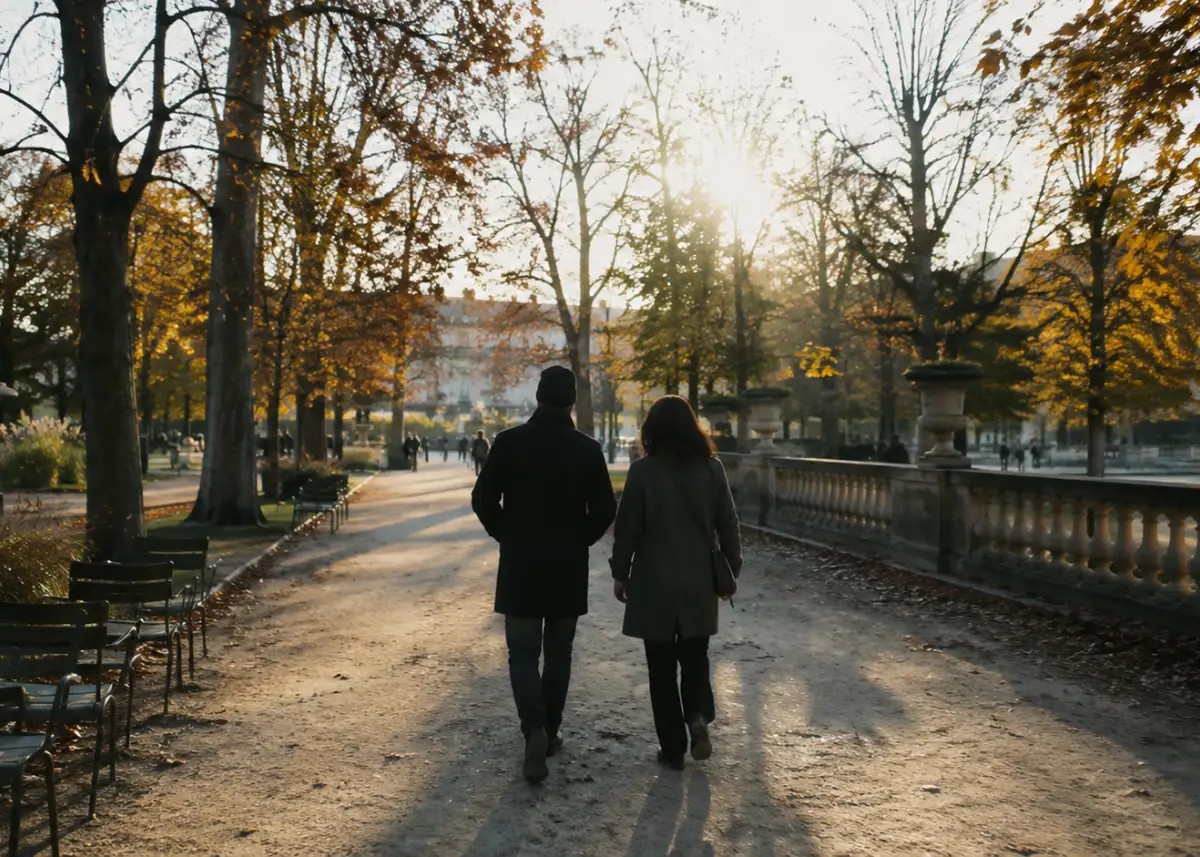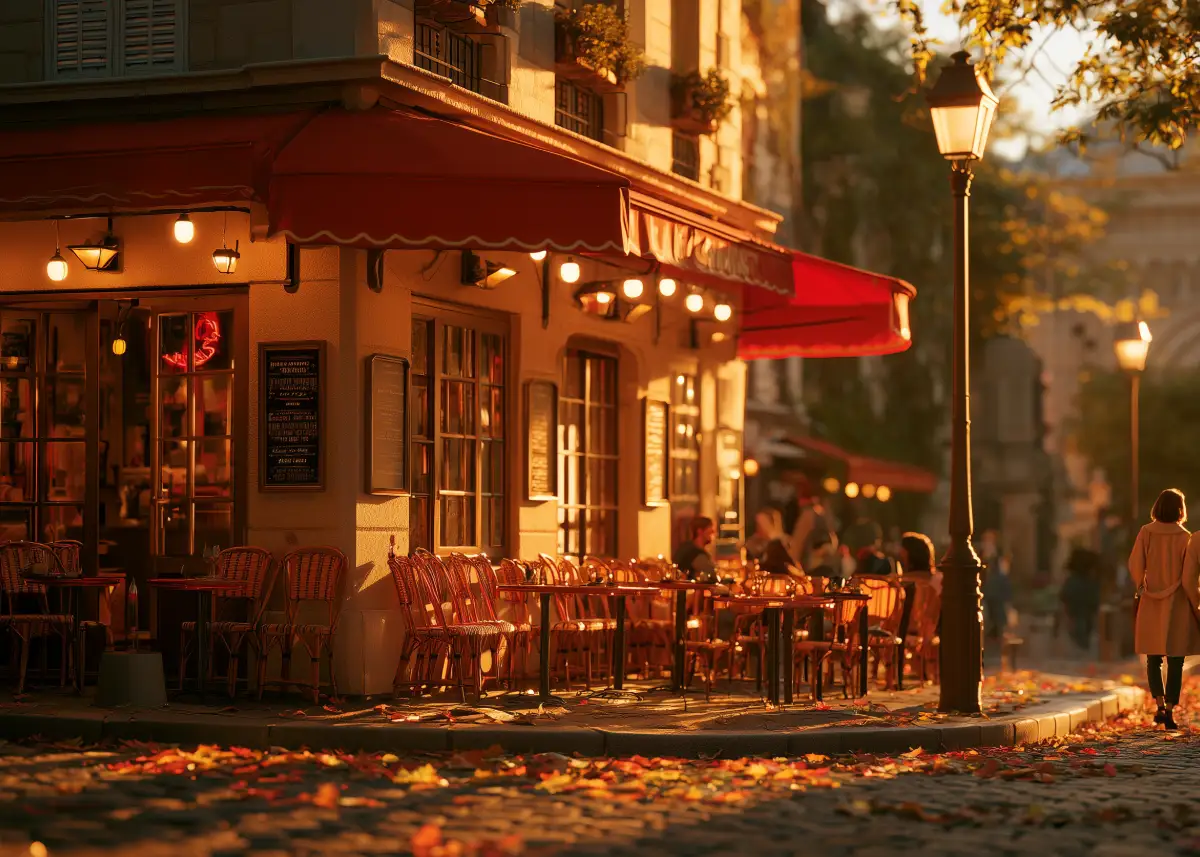



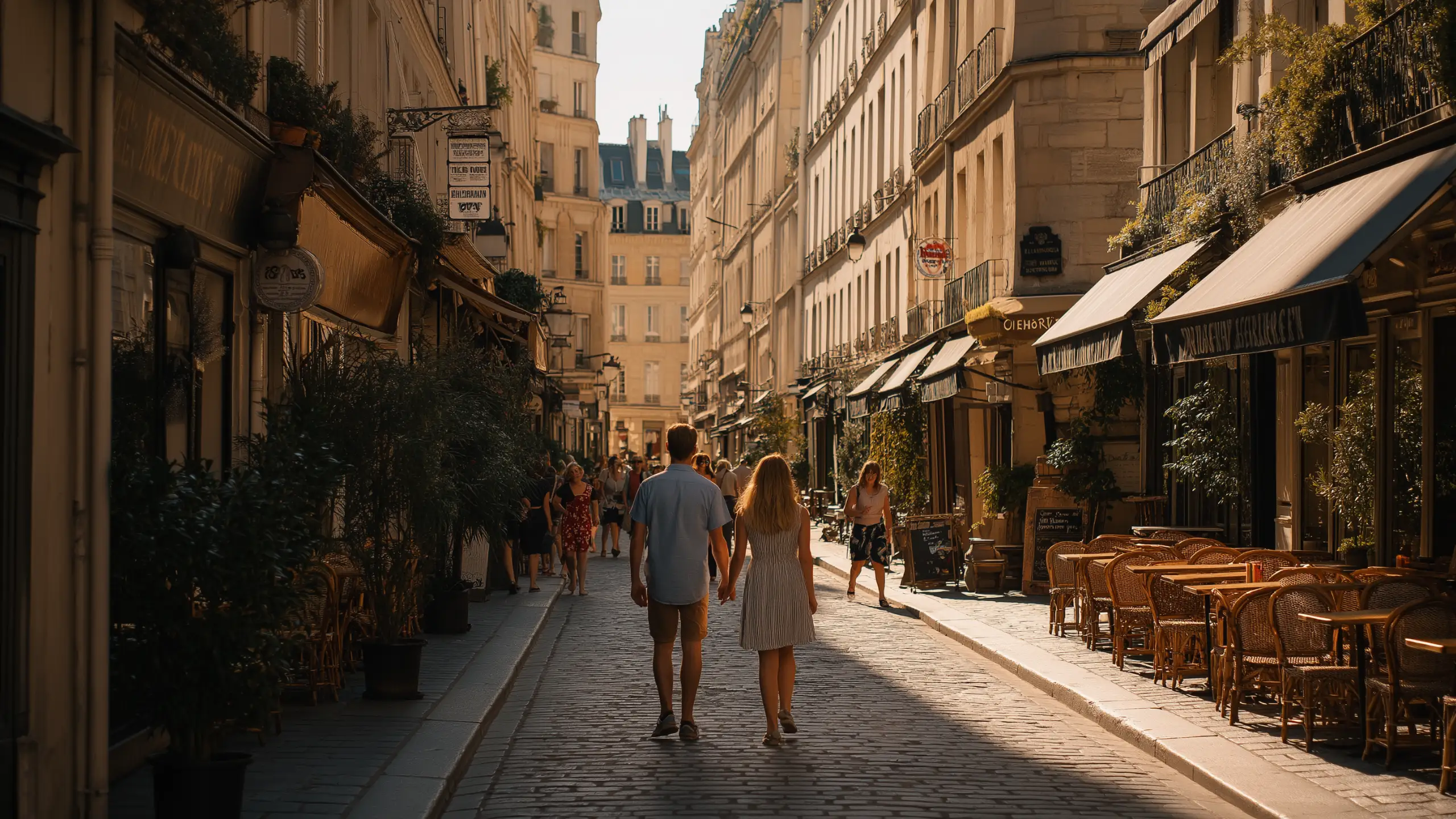
Sometimes you need to step away from the great landmarks to find the best of Paris. Between Pigalle and Notre-Dame-de-Lorette, the 9th arrondissement hides an almost untouched 19th-century Paris: neoclassical mansions, streets once home to Chopin, George Sand and Gustave Moreau, café terraces on cobbled squares, and rue des Martyrs to round it all off. A two-hour walk, entirely on foot, starting from the Hôtel R de Paris.
Stop 1 — Place Pigalle: the starting point
Leave the hotel and head towards Place Pigalle — an 8-minute walk up rue de Clichy. The square sits at the crossroads of the 9th and 18th arrondissements, between bohemian Paris and commerce, between yesterday and today. Number 9 was once home to the Café de la Nouvelle Athènes, a regular haunt of Toulouse-Lautrec, Manet, Renoir, Degas, Maupassant and Zola — it was in this café that Edgar Degas painted L'Absinthe with two friends posing for him.
Playground Duperré is worth a short detour: this multicoloured basketball court tucked between two buildings on rue Duperré is one of the neighbourhood’s most unusual photo spots.
Stop 2 — South Pigalle (SoPi): today’s 9th arrondissement
As you head south from Pigalle, you cross the area Parisians now call SoPi — South Pigalle. Cocktail bars, natural wine bistros, vintage shops, trendy restaurants. This is the 9th arrondissement at its most contemporary, just a few steps from historic Nouvelle Athènes. Rue Pierre Fontaine, rue Victor Massé and rue Jean-Baptiste Pigalle hold most of the action. If you walk through around aperitif time, several addresses from the hotel’s selection are in this area.
Stop 3 — Nouvelle Athènes: romantic Paris
Heading back east, you enter the historic heart of the neighbourhood: Nouvelle Athènes. From the early 19th century, even before the district was fully built up, developers and architects created villas and mansions inspired by Italian and Greek styles — hence the name. The area soon attracted the artistic and literary elite of Parisian Romanticism: Chopin, George Sand, Victor Hugo, Eugène Delacroix, Gustave Moreau, Claude Monet…
Stroll along rue Chaptal: at number 16, the Musée de la Vie Romantique occupies the former home of painter Ary Scheffer. A plaque at number 11 bis recalls that Serge Gainsbourg lived here in his youth. A little further on, another plaque notes that Louis de Funès, still a jazz pianist at the time, performed at the start of the street in a cabaret.
Two minutes away on foot, rue de La Rochefoucauld leads to the Musée Gustave Moreau (number 14) — the symbolist painter’s house-studio, preserved as it was in 1898, with 25,000 works and its famous spiral staircase. An essential stop if you have not visited it yet.