






You've just arrived in Paris and you're wondering how to buy a metro ticket, especially now that the little cardboard rectangle has disappeared from ticket windows. The system has actually become simpler, as long as you know a couple of up-to-date rules for 2026. Here's how to buy and use a transport ticket without any mistakes, whether you're passing through for a weekend or staying for a week.
What you need to know in 2026
The 2026 fares have been in effect since January 1st, with a modest 2.3% increase compared to last year. The basic ticket remains the ticket t+: it costs €2.55 at full price (€1.30 at reduced rate) and lets you travel on the metro, on the RER within Paris and on suburban trains across the Île-de-France network. For buses and trams, the ticket is a little cheaper, at €2.05 (€1.05 at reduced rate).
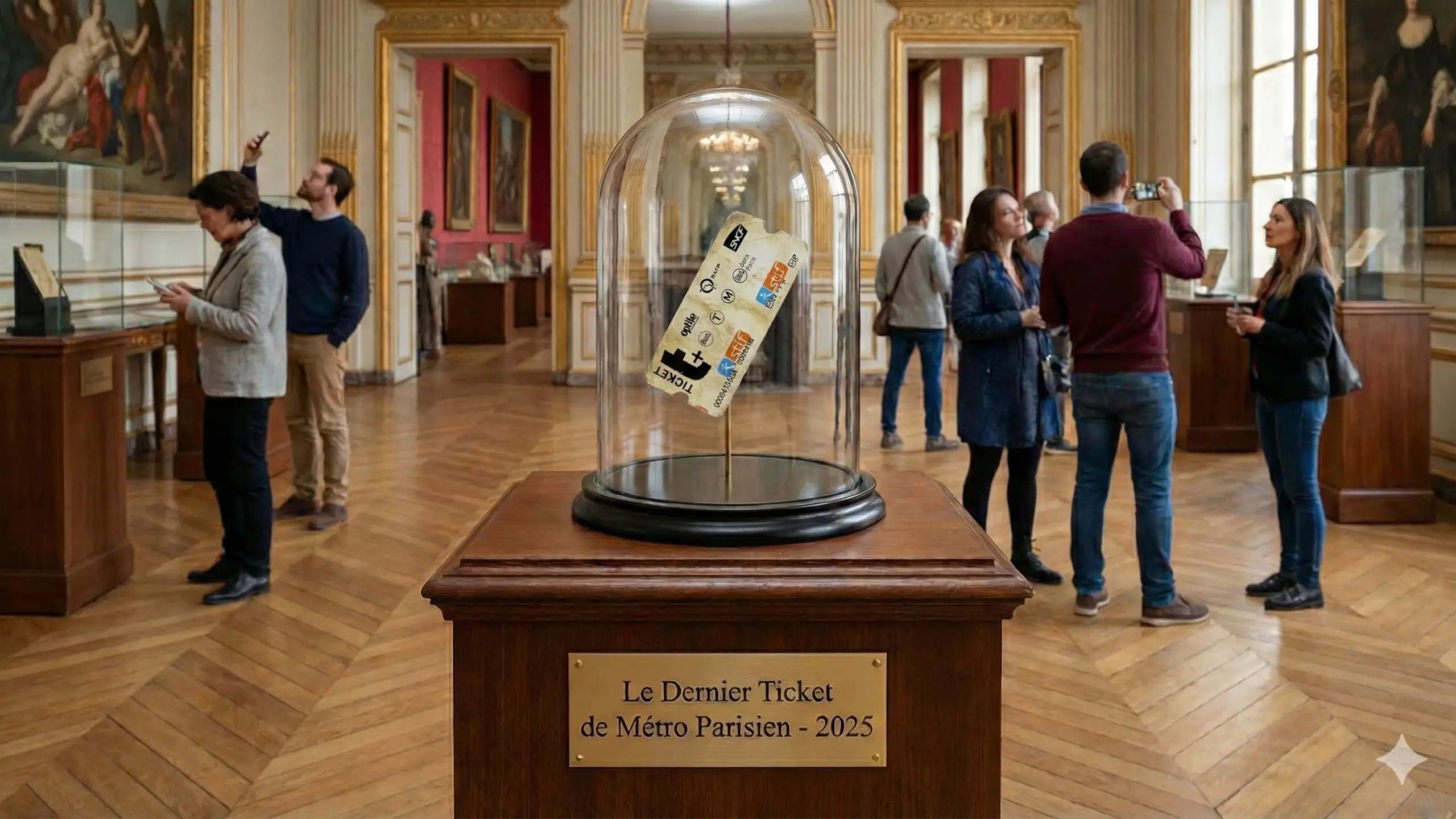
The real change lies elsewhere: the magnetic paper ticket has no longer been sold since November 1st, 2025. It has been replaced by a digital ticket, loaded onto a Navigo Easy card, onto the Île-de-France Mobilités app or onto the Bonjour RATP app. The pack of 10 tickets still exists, now only in digital form, at €17.35 (around 19% cheaper than buying single tickets).
If you've kept old paper tickets from a previous trip, they can still be exchanged at ticket windows during a transitional period. Since the exact deadline has shifted across official announcements, it's best to check it directly on the Île-de-France Mobilités website before you go.
Which ticket to choose depending on the length of your stay
For most visitors, the Navigo Easy card is the simplest solution. This card costs €2, can be bought at ticket windows and at station machines, and can be topped up as often as you like: a pack of tickets, a single journey, a day pass. You simply scan it at the gate, with nothing to print.
If you'd rather manage everything from your phone, the Île-de-France Mobilités and Bonjour RATP apps let you buy a ticket and validate it directly at the gate via NFC, on most recent smartphones.
For a longer or very active stay, two approaches are worth working out:
- The Navigo Semaine pass (all zones): €32.40, or €16.20 at reduced rate. Worthwhile from several journeys a day over a calendar week.
- The Navigo Mois pass (all zones): €90.80, or €45.40 at reduced rate, for a longer stay.
- The Paris Visite pass (zones 1 to 5): €30.60 for 1 day, €45.40 for 2 days, €63.80 for 3 days and €78.00 for 5 days, with unlimited travel.
The best approach is still to compare the cost of a pass with that of single tickets, depending on your plans: if you expect few journeys, the digital pack is often cheaper than an unlimited pass; conversely, the more journeys you make in a day, the more worthwhile the pass becomes.
The metro isn't always the most suitable option, depending on the time or destination. To help you choose between metro, bus, taxi and bike, our article on which transport to choose in Paris usefully complements this guide.
And if you'd rather book a ride than head underground, our guide to transport apps rounds up the most reliable options in the capital.
Paying by bank card: not yet at every gate
You'll often read that it will soon be enough to tap your bank card on the gate, as in the London Underground. That's partly true, but it isn't yet widespread in 2026. This direct contactless payment (open payment) is currently only active at the Orly exit, on line 14, since late June 2026, and at the Montmartre funicular, since early July 2026. Rollout across the rest of the network is planned in stages through to 2030.
In other words, everywhere else in the Paris metro, you still need a ticket: Navigo Easy, an app or a digital pack. Also note that this direct card payment comes with a slight surcharge (around €0.80 more per metro journey, so €3.35 in total) and doesn't include connections. For a stay, a standard ticket remains more cost-effective.
From Hôtel R de Paris
Staying on Rue de Clichy, in the 9th arrondissement, puts most lines within a few minutes' walk. The Place de Clichy station (lines 2 and 13) is about five minutes away: a machine and the gates are all you need to buy or top up a ticket there. Seven minutes' walk away, Gare Saint-Lazare (lines 3, 12 and 13, RER A and E, Transilien) offers more ticket windows and machines, as well as direct RER access to the airports and main train stations. At peak times, it's best to top up your card in advance or buy your ticket on the app to avoid queuing at the machines.
Buying a metro ticket in Paris is therefore no longer complicated in 2026: a topped-up Navigo Easy card, or the app on your phone, and you're ready to explore the capital without giving it another thought. To organize the rest of your stay, the hotel's practical information sheet brings together everything useful to know before you arrive.